
Nothing in photography is done automatically. A painter has to manually lay down the image surface on the support using brushes, palette knives, etc. In the case of photography, the laying down of the image surface on the support is done (automatically? No!) non-manually. This is the only semi-credible distinction I can think of between painting and photography (suffice it to say that in photography the laying down of the image surface on the support happens to be non-manual [not automatic] simply because someone else has previously manually programmed the photography apparatus, enabling it to do just that).
Things that are are commonly described as beautiful. There is nothing more disinterested than creating a representation of something which is. When things that are are represented in a disinterested manner, we describe such representations as beautiful. There is nothing more disinterested than painting a painting that shows, and hence is, a street corner which is – and this kind of object, this painting, we describe as beautiful.
The magic works in the nexus between painting and photography. The painter yearns to do what the photographer does; the photographer yearns to do what the painter does. Ultimately, both yearn to do (quite savagely) ‘the photographic’: the painter yearns to do what the photographer does, which the painter believes is ‘the photographic’; the photographer yearns to do what the painter does, which the photographer believes is ‘the photographic’. ‘The photographic’ is liminal and always in the messianic. No, the Messiah, here, never returns. Nothing, therefore, could be more disinterested than these two types of doings.
‘The photographic’ appears, at best, in the dimension of disinterestedness. Nothing attracts ‘the photographic’ better than good old mediocrity.
What about ethics? What is ethics? Ethics is the wastage of Time (one’s interest is disinterested).
One cannot in any manner see outside ‘the photographic’, but the future, necessarily, pretends incessantly otherwise. Indeed, what could be more disappointing than believing that ‘the photographic’ has to always be (look?) the same!
The intent in photography is to hold on to the instant. Not every instant will do. ‘The photographic’ is always (such) an instant.
The nothing is represented as is, being in being being being being out of alterity.
The truth is “in your head”; it is not to be found anywhere out there.
Once uttered, one can never belie one’s words. Words speak one’s mind.
Alterity is the world. Indeed, the Other is other to all that is otherwise. Alterity and Ontology are prior to each other.
God, heading everything, is an atheist and bereft of alterity. In Himself, He is the Same, hence the totality of nothing (please see above for a detailed explanation on how the nothing comes to be represented).
‘The photographic’ is seeing. Seeing recognizes.
As long as there are eyes to see, ‘the photographic’ can be beheld.
True indexicality cannot be inserted in a conditional sentence. Necessarily, outside the strict confines of the true index, there is no such thing as ‘the photographic’. What have we been doing all along? ‘The photographic’ is this… ‘the photographic’ is that… one thing is sure: all along, we have been talking about ‘the photographic’ with the hope of bringing it into existence using words. ‘The photographic’ is in the world, summoned… in moments… of… true indexicality. The everything and the nothing leave much to be desired. Otherwise than words?
The nothing is simply things freed from their linguistic determinants. Hence, the antipathy towards the thing-in-itself. The photography apparatus may indeed not see but simply blindly name, this by traversing space and holding on to objects lying therein, and this made possible due to its inbuilt linguistic programme (for more on this, see here), but the result of this process, the photograph, can only be referred to as a representation if one insists on clinging on to the term (or to terms [words?] in general). The photograph shows what it shows; but prior to being this or that, it looks the way it looks.
I see what I saw, therefore I see.
Not the law, but ‘the photographic’.
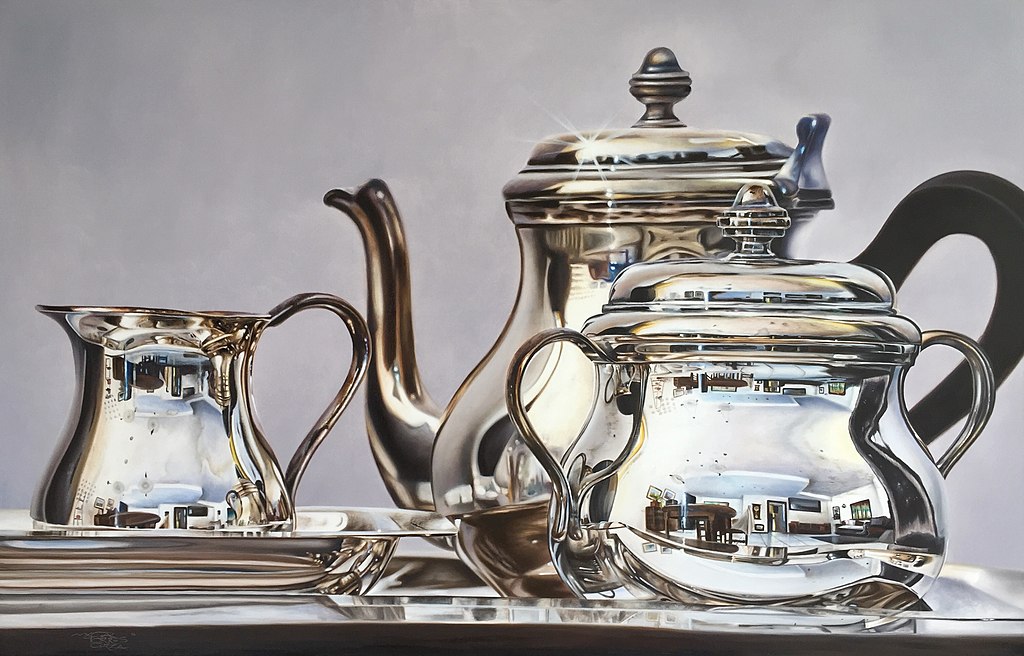
Featured Image:
Magda Torres Gurza, CC BY-SA 4.0, via Wikimedia Commons